How Infrared Sauna Can Fit Into a Recovery Routine
Oct 21, 2026
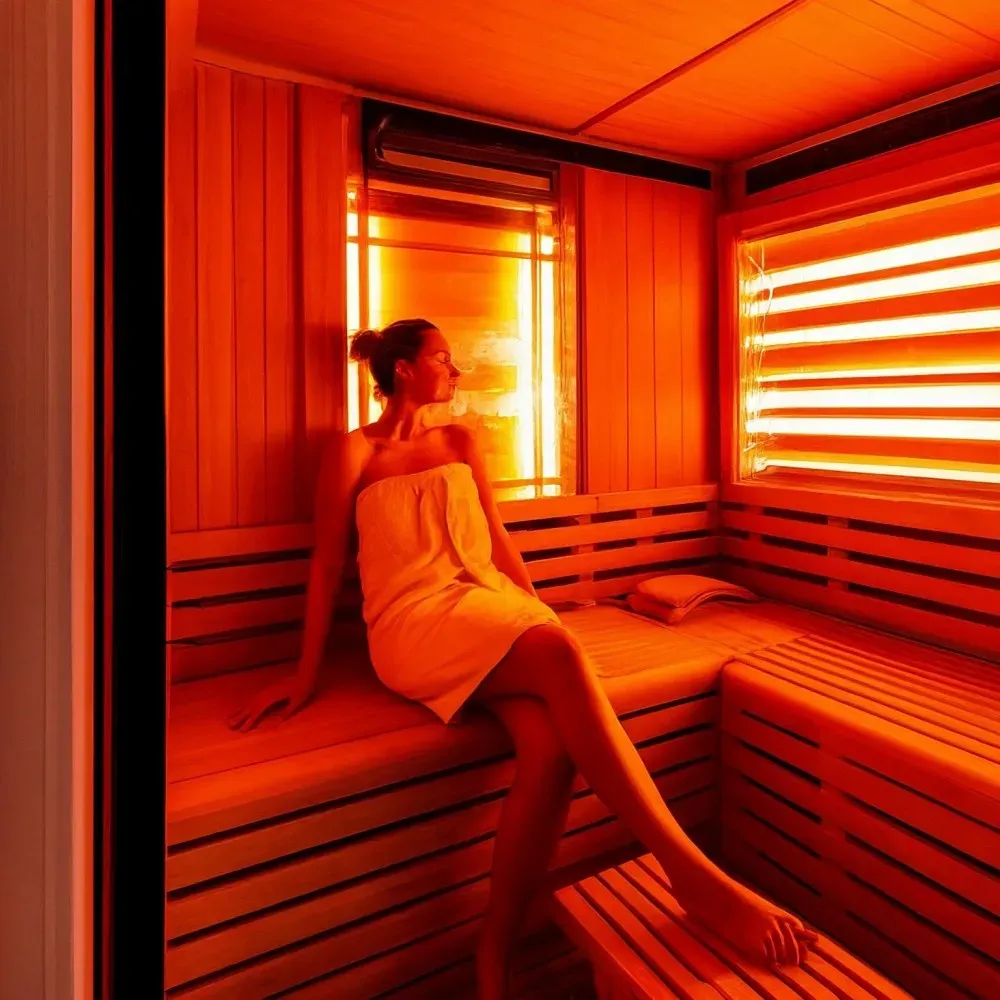
A demanding workout does not end when you leave the gym or finish your run.
The body still needs to:
Restore energy
Repair stressed tissues
Rebalance fluids
Manage exercise-related fatigue
Return the nervous system toward baseline
Adapt to the training stimulus
This is why recovery works best as a routine, rather than relying on one treatment immediately after exercise.
Infrared sauna can be one component of that routine.
It should not replace the fundamentals of recovery, but it can provide controlled heat exposure and a period of relaxation that may complement them.
Unlike a traditional sauna, which primarily heats the surrounding air, an infrared sauna uses infrared energy to heat the body directly.
The resulting heat exposure can produce familiar physiological responses, including:
Increased skin blood flow
Sweating
Increased heart rate
Vasodilation
Changes in cardiovascular workload
These responses are not unique to infrared saunas. They are characteristics of heat exposure more generally.
That distinction matters because much of the scientific literature on sauna use involves traditional sauna bathing, while research specifically examining infrared sauna systems is more limited.
The simplest way to think about sauna therapy is as a passive recovery modality.
Unlike walking, stretching, or strength training, you are not actively exercising while using the sauna.
Instead, the body responds to controlled heat while you remain relatively still.
That makes sauna particularly suited to the part of a recovery routine focused on:
Relaxation → Heat exposure → Recovery
rather than:
Training → More training
Immediately after demanding exercise, the priority should generally be to cool down appropriately, replace fluids, and begin recovery.
That means an infrared sauna does not necessarily need to be the first thing you do after finishing a workout.
A more sensible sequence may be:
Exercise
↓
Cool down
↓
Hydrate and refuel
↓
Rest
↓
Sauna, if appropriate
This allows you to address the basic demands created by exercise before adding additional heat stress.
One of the most practical benefits of sauna use may be its ability to create a dedicated period of relaxation.
Training and daily life both create physical and psychological demands.
A sauna session can provide time away from:
Work
Screens
Exercise
Continuous stimulation
The warmth itself can also feel relaxing, particularly when muscles feel stiff after physical activity.
For some people, this makes sauna useful as part of an evening recovery routine.
Heat exposure causes blood vessels near the skin to dilate, increasing blood flow to help regulate body temperature.
Heart rate also increases as the cardiovascular system responds to the heat.
Research on sauna bathing has demonstrated these acute cardiovascular responses, and repeated sauna exposure has been studied for potential effects on vascular health.
However, a temporary increase in circulation should not automatically be described as "flushing toxins" or dramatically accelerating tissue repair.
The body's liver and kidneys remain responsible for most metabolic waste processing.
This is an area where the evidence needs to be interpreted carefully.
Heat exposure may help people feel more relaxed and may reduce the perception of muscular stiffness.
Research has also investigated whether post-exercise sauna exposure can influence training adaptation and recovery.
For example, a small study published in the Journal of Human Kinetics found that post-exercise infrared sauna exposure influenced some measures of recovery in recreationally active participants. However, studies of this size cannot establish broad conclusions for every athlete or sauna system.
More broadly, research into passive heat exposure continues to examine potential effects on cardiovascular adaptation and exercise performance.
The appropriate conclusion is:
Sauna may support recovery, but it should not be presented as a proven method for dramatically accelerating muscle repair.
Heat exposure can produce cardiovascular responses that overlap with some aspects of exercise.
Heart rate rises. Blood vessels dilate. Cardiac output can increase.
But sauna does not reproduce everything exercise provides.
Exercise also creates:
Muscular loading
Bone loading
Neuromuscular adaptation
Cardiovascular conditioning
Balance and coordination demands
For this reason, sauna should be considered a complement to exercise, not an alternative.
You do not have to wait until after a hard workout to use a sauna.
A recovery day may involve:
Light walking
Mobility work
Normal daily activity
Adequate nutrition
Quality sleep
Sauna or other relaxation practices
This can create a useful distinction between active recovery and passive recovery.
Low-intensity movement that keeps the body gently active.
Examples:
Walking
Easy cycling
Mobility exercises
Strategies that allow the body to recover without significant physical exertion.
Examples:
Rest
Sleep
Sauna
Massage
Compression
Neither category needs to replace the other.
Consider a runner who completes a long session.
Their recovery priorities might be:
Cool down and replace fluids.
Eat an appropriate meal containing carbohydrate and protein.
Allow the body to settle.
Use gentle mobility or walking if comfortable.
Use infrared sauna if heat exposure is appropriate and well tolerated.
Prioritize sleep.
The sauna is therefore one part of the recovery sequence, not the central component.
Strength training creates a different type of stress from endurance exercise.
The muscles experience mechanical loading that requires time for adaptation and repair.
After strength training, a recovery routine can include:
Adequate protein
Sufficient energy intake
Hydration
Sleep
Appropriate rest between sessions
Mobility work
Optional sauna use
Heat may help with relaxation and perceived muscle comfort, but it does not replace the recovery time required for muscle adaptation.
A recovery routine does not necessarily need to use only one modality.
For example:
Compression
May be used when the focus is on tired or sore legs.
Red-Light Therapy
May be considered when the goal is photobiomodulation and tissue recovery support.
PEMF
May be explored as an adjunctive recovery modality.
Robotic Back Care
May be more relevant when back tension and mobility are the primary concerns.
Infrared Sauna
May be useful when controlled heat and relaxation are the priority.
The important question is not how many technologies can be used.
It is whether each one serves a specific purpose.
This deserves particular attention because "detox" is one of the most common sauna claims.
Sweating is primarily the body's method of regulating temperature.
The liver, kidneys, gastrointestinal tract, and other physiological systems handle the body's normal detoxification and waste-processing functions.
Sweating can cause fluid and electrolyte loss, but that does not mean a sauna session is "cleansing" the body of unspecified toxins.
For an evidence-based recovery routine, it is more accurate to focus on:
Heat exposure
Relaxation
Circulatory responses
Recovery comfort
rather than generalized detox claims.
Sauna use increases sweating, which means additional fluid loss.
This becomes particularly important when sauna follows exercise because the workout may have already caused substantial fluid loss.
Pay attention to:
Thirst
Sweat losses
Exercise duration
Environmental temperature
Individual tolerance
Avoid treating dehydration as a normal part of an effective sauna session.
More sweating does not necessarily mean better recovery.
Heat exposure is not appropriate for everyone.
Extra caution may be needed for individuals with certain cardiovascular conditions, problems with blood-pressure regulation, dehydration, heat intolerance, or medical conditions affected by heat.
Some medications can also influence blood pressure, sweating, or fluid balance.
If you have a medical condition or take medications that could affect heat tolerance, discuss sauna use with an appropriate healthcare professional.
During a session, stop if you experience:
Significant dizziness
Nausea
Weakness
Faintness
Unusual shortness of breath
Feeling unwell
The purpose of recovery is to support the body—not push it through another stressor.
A simple weekly framework might look like this:
Exercise → Cool down → Hydrate → Refuel → Optional recovery modality → Sleep
Light movement → Mobility → Optional sauna → Normal nutrition → Sleep
Pay greater attention to:
Sleep duration
Training intensity
Hydration
Nutrition
Muscle soreness
Overall energy
Use recovery technology as needed rather than automatically adding more treatment.
There is no universally established frequency that guarantees better recovery.
Research protocols vary substantially, and individual tolerance differs.
Instead of chasing a specific number of sessions, consider:
How your body responds
How much heat exposure you already receive
Your hydration status
Your training schedule
Your overall health
Consistency should not come at the expense of comfort or safety.
The growing recovery industry offers increasingly sophisticated technologies, but more technology does not necessarily mean better recovery.
A strong recovery routine still starts with:
Sleep
Nutrition
Hydration
Appropriate training
Movement
Rest
Infrared sauna can then add another element: controlled heat exposure combined with dedicated relaxation time.
That is a useful role without needing to overstate what the technology can accomplish.
Infrared sauna can fit into a recovery routine as a passive heat and relaxation modality.
Heat exposure increases skin blood flow, sweating, and cardiovascular activity.
Sauna may help with relaxation and perceived muscle comfort, while research into exercise-recovery benefits continues to develop.
Much of the strongest sauna research involves traditional sauna bathing rather than infrared-specific systems.
Sauna does not replace exercise, hydration, nutrition, sleep, or appropriate recovery time.
Sweating should not be marketed as a generalized "detox."
Hydration and individual heat tolerance are important, particularly after exercise.
An infrared sauna session can be valuable, but its role is best understood within the larger recovery picture.
The goal is not to make recovery more complicated. It is to identify what the body needs and use appropriate tools to support that need.
For one person, that may be a light walk. For another, it may be mobility work or compression. For someone else, a period of controlled heat and relaxation may be the most useful addition.
The technology is the tool. The recovery routine is the strategy.